Welsh Mythology
Y Ddraig Goch — The Red Dragon of Wales
 Place an image named red-dragon.jpg in the images/ folder to display it here.
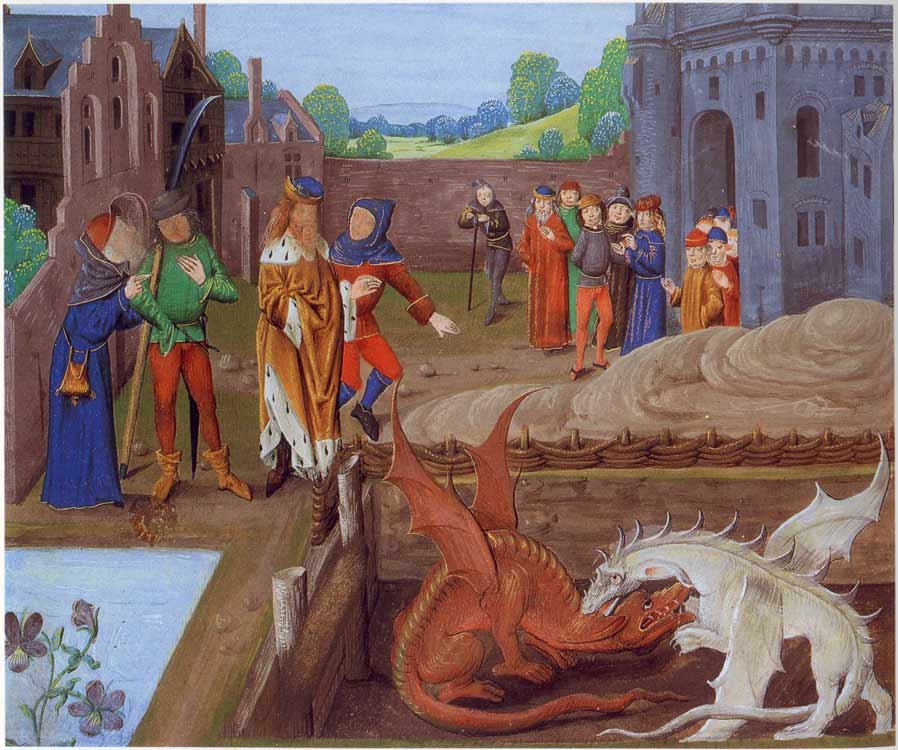
No symbol is more immediately associated with Wales than the red dragon — Y Ddraig Goch — rampant on the white and green field of the national flag. The legend begins with a crisis: the British king Vortigern's tower at Dinas Emrys collapses each night. The boy Merlin reveals that beneath the hill sleep two dragons — one red, one white — whose nightly battle destroys whatever is built above. The red dragon represents the native Britons; the white, the Saxon invaders.
"Dig down, and you will find a pool. Drain it, and you will find two hollow stones. In the stones you will find two sleeping dragons." — Geoffrey of Monmouth, Historia Regum Britanniae, 1138
When Henry VII, of Welsh descent, took the English throne in 1485, he marched under the red dragon's banner — and the Welsh celebrated his victory as the fulfilment of Merlin's ancient prophecy. One of the oldest national symbols in the world.
Deirdre of the Sorrows
From the Irish tradition, the story of Deirdre stands as one of the most heartbreaking love stories in all of world literature. At her birth, the druid Cathbad prophesied she would be the most beautiful woman in Ireland, and that because of her, great kings would go into exile and warriors would die.
King Conchobar had her raised in isolation, promised to himself in marriage. But Deirdre glimpsed a raven drinking blood from a slaughtered calf in the snow and told her nurse she wanted a lover with hair as black as the raven, cheeks as red as the blood, and skin as white as the snow. She found Naoise and they fled to Scotland — happy, free, and fugitive.
They returned on Conchobar's treacherous invitation. Naoise was killed. Rather than submit, Deirdre dashed out her brains against a rock. The prophecy was fulfilled — not because fate was inevitable, but because the people who might have broken the chain chose otherwise.
Creatures & Supernatural Beings
The Loch Ness Monster — Nessie
 Place an image named loch-ness.jpg in the images/ folder to display it here.
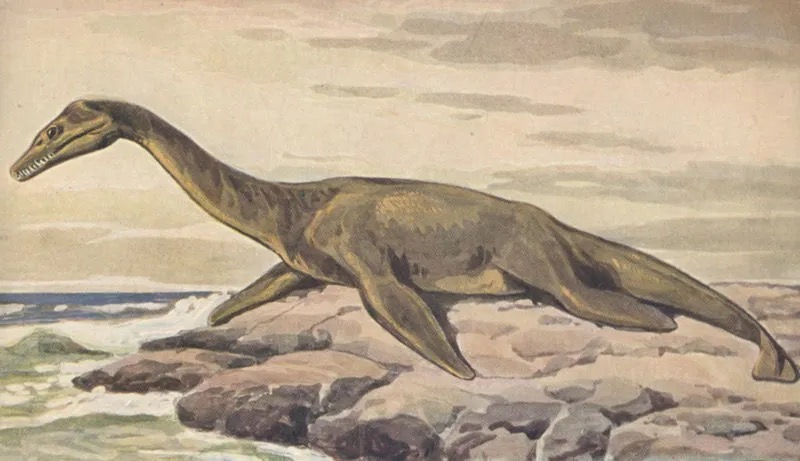
The Loch Ness Monster occupies a unique position in British folklore: simultaneously one of the oldest supernatural traditions in Scottish Highland mythology and one of the most spectacular modern legends in the world. Loch Ness itself is remarkable — twenty-three miles long, over 750 feet deep in places, so peaty and dark that visibility beneath the surface extends only a few feet.
The legend is rooted in the ancient Highland tradition of the beach-usige (water horse). The earliest written reference comes from the Life of St. Columba (Adomnán, 690 CE): Columba repelled a creature attacking a monk in the River Ness with the sign of the cross and a direct command.
Everything changed in 1933 when the Inverness Courier reported a local couple seeing "an enormous animal rolling and plunging" in the loch. The famous "Surgeon's Photograph" of 1934 — later exposed as a hoax — gave the world its definitive image of a plesiosaur-like creature.
"The beast raised its head above the water with a great roar. But the blessed man raised his holy hand and commanded it: Go no further! The monster, terrified, fled back as swiftly as if drawn by ropes." — Adomnán of Iona, Vita Sancti Columbae, 690 CE
Kelpies — Shapeshifting Water Spirits
 Place an image named kelpie.jpg in the images/ folder to display it here.
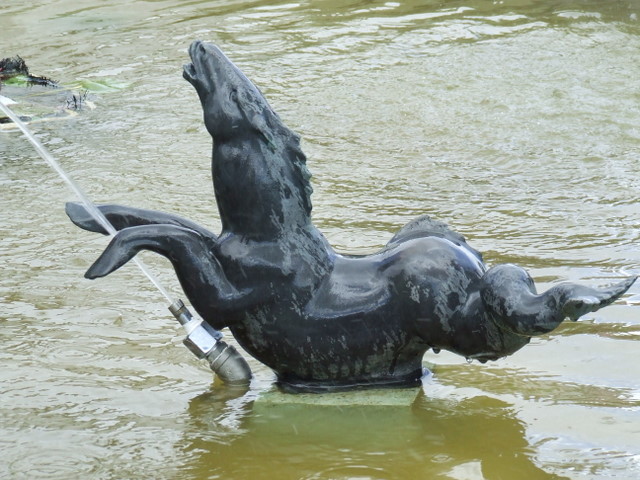
Kelpies are supernatural water spirits from Scottish folklore, described as horses capable of transforming into humans. They inhabit rivers, lochs, and marshes, luring unwary travellers to their doom. Anyone who mounts a kelpie finds their hands adhere to its mane — the horse plunges into the depths, and the rider drowns.
Stories of kelpies functioned as cautionary tales of striking practical wisdom — warning people to approach Scotland's rivers and lochs with respect, because the dangers of deep cold water were very real. They embody the unpredictable power of water: both its life-giving and its deadly qualities.
Spirits, Symbols & Giants
Am Fear Liath Mòr
The Big Grey Man of Ben Macdui
On Scotland's second-highest peak, hikers report a massive shadowy humanoid shape, heavy footsteps, and overwhelming terror. The distinguished climber Norman Collie reported in 1925 that in 1891 he had run blindly for miles without looking back. Personifies the genuine dangers and psychological intensity of the high mountains — the universal human need to externalise fear and give it shape.
The Green Man
Symbol of Life, Growth & Renewal
A human face wreathed in leaves, with foliage growing from the mouth, nose, and eyes — carved into churches, cathedrals, and manuscripts throughout Britain and Ireland. Rooted in pre-Christian pagan tradition, assimilated into medieval Christian art. Symbolises the cycles of life: birth, growth, decay, and rebirth. Still remarkably present today in pub names, festival imagery, and environmentalism.
Fionn Mac Cumhaill & the Giant's Causeway
 Place an image named giants-causeway.jpg in the images/ folder to display it here.
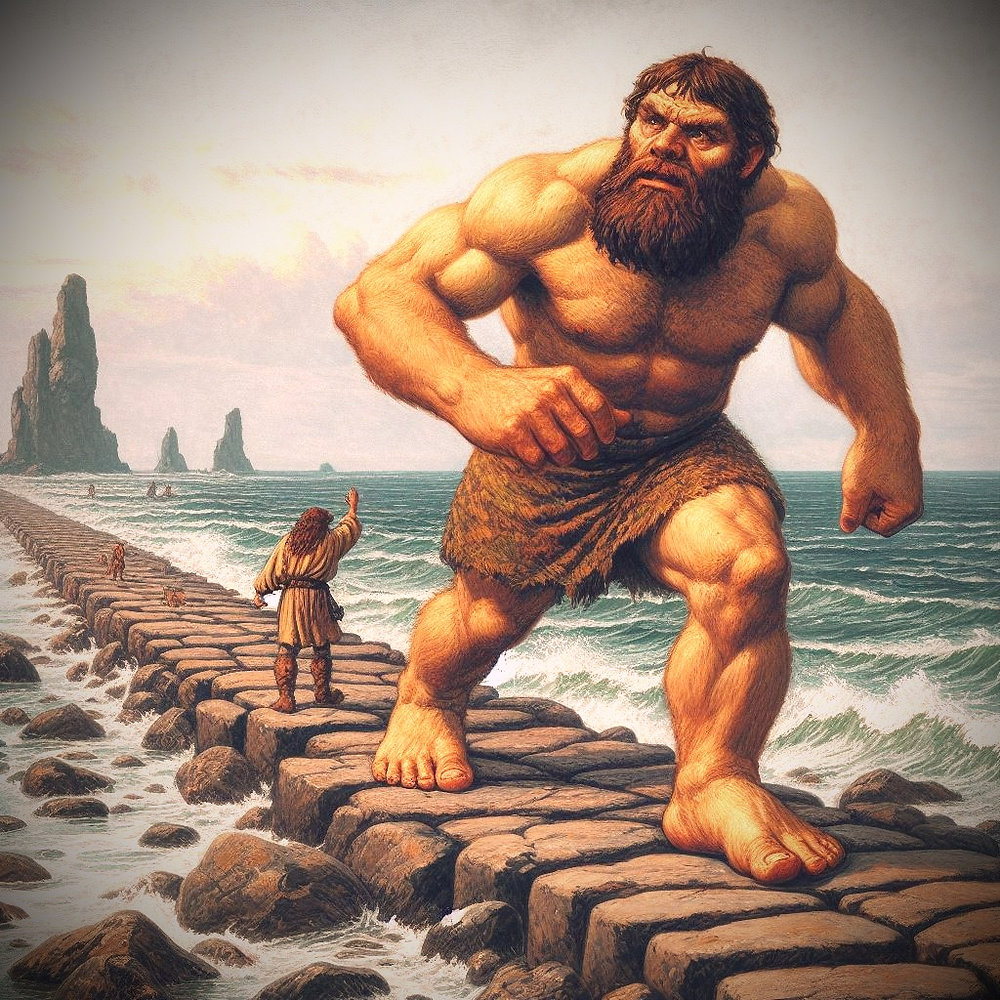
The Giant's Causeway — approximately 40,000 interlocking hexagonal basalt columns descending from the cliffs into the sea on Ireland's north coast — is, in geological fact, the product of an ancient volcanic eruption 60 million years ago. But folklore offers a far more satisfying explanation.
Fionn Mac Cumhaill (Finn McCool) built the Causeway himself to confront the Scottish giant Benandonner. Seeing how enormous Benandonner actually was, Fionn ran home. His wife Sadhbh disguised Fionn as a baby and tucked him into a cradle. When Benandonner arrived and saw the enormous "infant," he reasoned that if the child was this size, the father must be terrifying — and fled back to Scotland, ripping up the Causeway behind him.
The columns on the Scottish island of Staffa — geologically identical, because they are part of the same ancient lava flow — are said to be the other end of Fionn's road. The legend is a mythological explanation for a spectacular natural phenomenon, demonstrating the enduring human desire to transform natural wonders into meaningful narratives that make the landscape feel like home.
Conclusion
British and Irish folklore weaves together heroes, supernatural creatures, spirits, and giants to create one of the richest and most enduring mythological traditions in the world. These are not museum pieces. They are living things — stories that still have something urgent and true to say about what it means to be human.
"These stories endure because they are true — not literally, perhaps, but in the deeper sense that all great mythology is true: they tell us who we are, where we come from, what we fear, what we love, and what we dare to hope."
Arthur sleeps on Avalon.
The Once and Future King waits until Britain needs him most.
Robin Hood walks the greenwood.
The outlaw's moral clarity speaks to every age of corruption.
The Banshee walks the night air.
She mourns us before we know we are to be mourned.
Something stirs in Loch Ness.
In the dark water, something still might move beneath the surface.